
By Reham Bastawi
A stream of consciousness about the conflict in North Sudan.
Loss…
Loss comes in many forms. For example, losing touch with a friend. This friend at some point in your history meant the world to you and as you grow and develop as individuals you find yourselves taking different paths. Sometimes, this happens naturally or induced by conflict. Now let’s say it was induced by conflict and not resolved. After some time, you begin to reflect on that relationship and a part of you misses their friendship (at least the good parts of it) and you wonder how they are, if they’re happy, and do they still think about you the same way you think about them. You feel hurt from their absence but, there is hope. Hope that maybe one day your paths will cross again, this time the conflict will be resolved, and you can go back to enjoying each other’s company. Now that hope makes the pain of that loss a little less painful.
I lost my older brother Rayan in March 2023. He was not only my brother, but he was also a very dear friend to me. When he passed away, for the first time in my life I experienced another form of loss, a loss that is permanent. There is nothing to be said about a loss like this that argues against the fact it is objective, and no subjectivity can change the fact the person you love is gone. The pain does not lessen, acceptance is what changes. As hope does not have space when fantasising about paths crossing one day, in this reality and, if you’re a faithful person, hope only exists when you pray that one day you reunite in a different reality or afterlife. But for now, the density of loss will persist.
Home…
Just like Loss, Home can come in many forms. It is not necessarily just a location, or physical structure, it can be loved ones, community, smells, environment, sounds such as music and laughter, and a feeling of comfort and safety. Home is not singular; one can experience multiple homes which are unique and special in their own right.
Sudan…
Sudan is a home for me. My parents were born and raised in Khartoum. They moved to the UK in the nineties with ambitions for a better quality of life. They left their home to find a new home.
The home my parents created in the UK was a huge compromise. From the outside it looks like a normal British home but, as soon as you walked in you would be transported to Sudan. The smell of bahkoor, the bold red and black of the traditional Sudanese furniture, painted with specs of gold, made out of carved wood and upholstered with macrame, and art and pottery dotted all over. Our family home is a home away from home. My parents maintained a strong Sudanese identity and were not too bothered to blend into the culture in the UK, or at least disassociate from the Sudanese heritage. So, I lived in a funny paradox. Outside my home I was British, but as soon as I stepped inside, I was Sudanese. Both cultures play a role in who I am, and make up pivotal parts of my identity.
With the political climate and crisis that Sudan is in currently, I’m experiencing a loss of a home, and it feels permanent. War throughout history causes permanent change, and this change is usually a product of damage and destruction. The damage isn’t strictly limited to infrastructure, houses, restaurants, and material things; the damage in my eyes also impacts the culture.
When I think about what is happening to Sudan and what has happened, I wonder about the culture. What will happen to it? Will it be able to stay the same? How much of it will we lose? Will we forget?
From spending time with my Sudanese community in the UK, and my family, while we all support each other and grieve the loss of our collective home, I begin to notice potential butterfly effects beginning to occur.
For example, my mother and her friends speak about how their stock of Sudanese herbs and spices that they brought in bulk from their last trip to Sudan is running low, and they’re concerned about how they can make their daily meals. It would be inconsiderate to suggest that they just make different recipes with ingredients they could easily source in the UK or elsewhere but, that’s not the point. The point is, in these trying times, all they have from home are these traditional Sudanese meals. Amongst the clothing, bahkoor and songs, it’s their way of keeping Sudan alive. It’s their rebellion against the power-hungry war proprietors. It’s their way of saying, “They’ve bombed us, kicked us out of our homes, caused a mass displacement, inflicted many levels of violation and violence but they haven’t taken our Sudanese spirit from us (the Sudan from within us). We will still cook our home dishes, sing our home song and dance our worries away together. We will stick together, and one day return to what is ours. Sudan isn’t just land. The true Sudan is the culture, and the culture is in the people”.
However, the sad thing is that these things that remind us of our culture are now becoming sentimental, no longer casual tools of daily life, and sentimentality is symbiotic with a fond memory. I fear that parts of our colourful and vibrant culture will remain a memory, and what if that memory is forgotten…
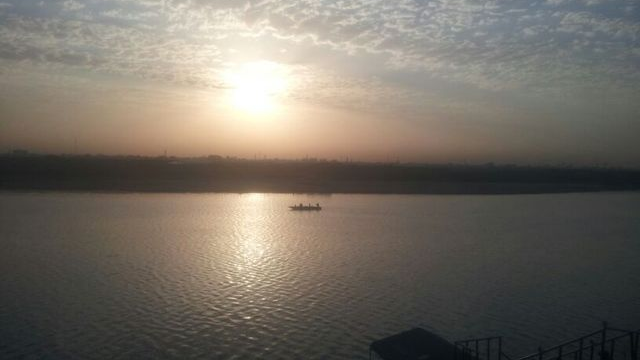
Parts of the culture will remain alive in the displaced and orphaned peoples of Sudan, and other parts will be lost because it can only be experienced while in Sudan. Like going to sit under a tree for shade by the river Nile and drinking a hot, mint tea to cool yourself down, sitting with friends, family and strangers while you chat, and people watch. That’s something I can only hope to experience again. Will I ever be able to visit my grandmother’s neighbourhood where the doors to everyone’s home are always open, and you’re welcomed without an invite, you’re guaranteed a decent feast and quality time with family, friends, and your neighbour.
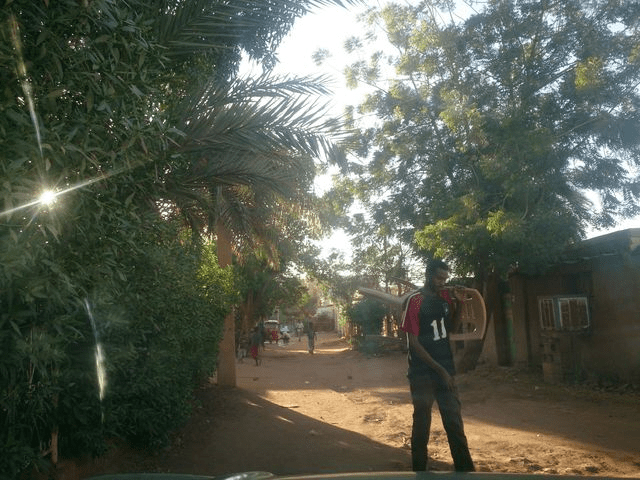
I will miss the feeling that due to the culture you are reassured you have a community, its assumed even, access to one is not complicated, and compassion is in abundance. Culture is made up of many elements, physical and the spiritual, one isn’t separate to the other. War has caused a loss of homes within my grandmother’s neighbourhood, amongst other neighbourhoods. I’ve lost family members, and neighbours, so have other Sudanese people who are surviving the war or who have managed to afford to evacuate. So even when the War is over, Sudan as I remember and love will not be the same because of this loss.
—
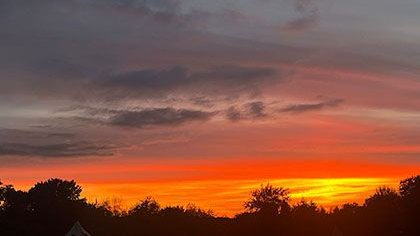
Sama al Hamra: ‘The Red Sky’ is a Sudanese sarcastic joke, used in reply to the question ‘where are you going?’. It’s funny because it’s not possible to go the red sky, and tells the other person to mind their own business. However, I chose it for the title of this piece, as its metaphoric for how I feel about Sudan. The red sky is beautiful but not reachable.
Bahkoor: is a type of incense, a loose mixture of sandal wood, oils, and herbs. Usually sprinkled on top of lit coals and releases strong woody/earthy aromas.
 Bad Apple Magazine