
By Beth, a trans person keeping a low profile.
I recently attended a workshop about power and group dynamics facilitated by the lovely people at Bad Apple zine, during which I made a realisation that chilled me to my very core.
We discussed the role of faith when giving oneself to a project. Specifically, having faith in the people who hold power within the group/community/organisation. In faith we give ourselves to a cause, in return we trust that we will be valued and safeguarded.
Power dynamics persist everywhere. “We are all equal” and “no one has any more power than anyone else” is almost never true. Even if people are trying their best, class, race, gender and sexuality, for example, play their part in group power dynamics.
The chill, for me, came when I realised that power dynamics were at play within me as a person and that they were abusive, as if I were two people, one vulnerable and the other controlling. I have often identified with some aspects of the Gollum character in the Peter Jackson Lord of the Rings movies. That day I realised to a new, revealing and frightening level exactly why.
For the longest time I have despised myself and regularly tell myself out loud that “I hate you”. The relationship is like the way we sometimes see the Gollum character depicted as two beings talking to each other. One has control over the other, portraying themselves as the protector for the other vulnerable person of Gollum. However, they hate each other and will say as much to one another.
I have always been trans, where on this spectrum I sit I’m not quite sure because I have never been able to freely explore my gender.
One nonuniform day, in primary school, I dressed more like me. Not feminine as such, but in clothes and in a way that I wanted to dress. By first break, due to comments, looks and laughter, I was under a table taking as much off as I could and throwing it into my school bag. My friend, a girl, followed me, seeing something was up. We must have been around 8 years old, and she tried to encourage me. I felt so much shame that her care would never have been enough.
When I was 11, I was hanging out with some of the girls I was friends with. Friends of which gender I had noticeably more of than any of the other boys, even to the point of occasionally being called a “ladies’ man” – make of that what you will. I had an opportunity to try on makeup and I jumped at the chance. Later, when my dad saw me, he was clearly shocked. Immediately feeling the tension, I tried to laugh it off and made a joke. In response, he uttered a single sentence that made clear that I must never do such a thing ever again. He didn’t shout, he simply made me feel utterly ashamed of myself.
Furthermore, I was bullied a lot in school, for my looks, and for, as my mum put it, “being sensitive”. I was a boy but never accepted by the boy’s club. I found acceptance with the girls but was never properly one of them.
The chill was a realisation that over this time a second version of me had been born. There was the vulnerable me that needed nurture, recognition and safety, and a brutally cruel dictator who, in the name of security, locked the vulnerable person in a cold dark prison. The vulnerable came to despise the dictator for the cruelty and the dictator despised the vulnerable for their very existence.
Interestingly, the vulnerable Gollum is kept safe by the cruel Gollum, in the same way the vulnerable me has also been kept safe by the dictator. I did not, and do not, live in a world where I can safely be myself all the time, and if I had been back then the bullying would have been so much worse. In this I do not excuse the dictator only recognise that there is a role for the dictator to play.
Therefore, what I need is a bodyguard who serves the vulnerable me. A person who sometimes, for genuine safety, says no, but in a context where they are always looking to say yes. Someone who is vigilant but not controlling.
For this to happen the dictator needs to experience a crisis of control, even feeling triggered, anxious, scared and ashamed, while the vulnerable is allowed to grow and explore. Recently I went shopping, in public, for feminine clothes. I didn’t buy anything, but I did try on clothes. The dictator did feel all the negative emotions; it was a crisis of control. However, with space to process, it’s a step toward the dictator realising that it’s ok to let go, to instead become a bodyguard in which there becomes a healthier balance between the two persons.
I also recommend counselling and supportive friends/family!
In communities and organisations some people often have more power, whether it be through organisational structures or race/gender/sexuality/class, and when this is the case, they can use this power to be a bodyguard and not a dictator; to support the group to thrive, not to nefariously control. Therefore, dictators need to either have a crisis of control and become bodyguards or be ditched.
Relationships are always changing. At some point, bodyguards are not needed anymore and will go through another crisis, and people who were vulnerable will gain more confidence and take on new roles. Ideally, we are working towards a place where no one has more power that anyone else. This is not a state we can permanently reach but requires constant relational work.
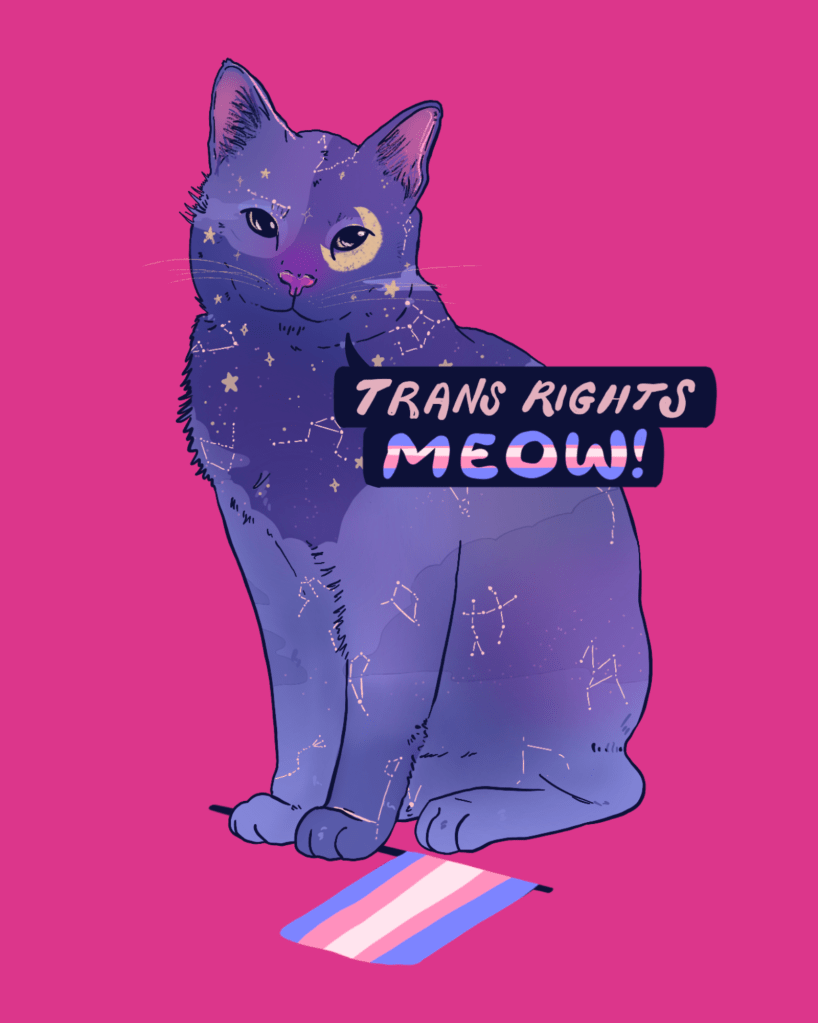
as Liberal Jane, who is a
queer reproductive justice
artivist living in Virginia,
USA.
 Bad Apple Magazine