
Vida O’Riordan
St. Felicity and St. Perpetua
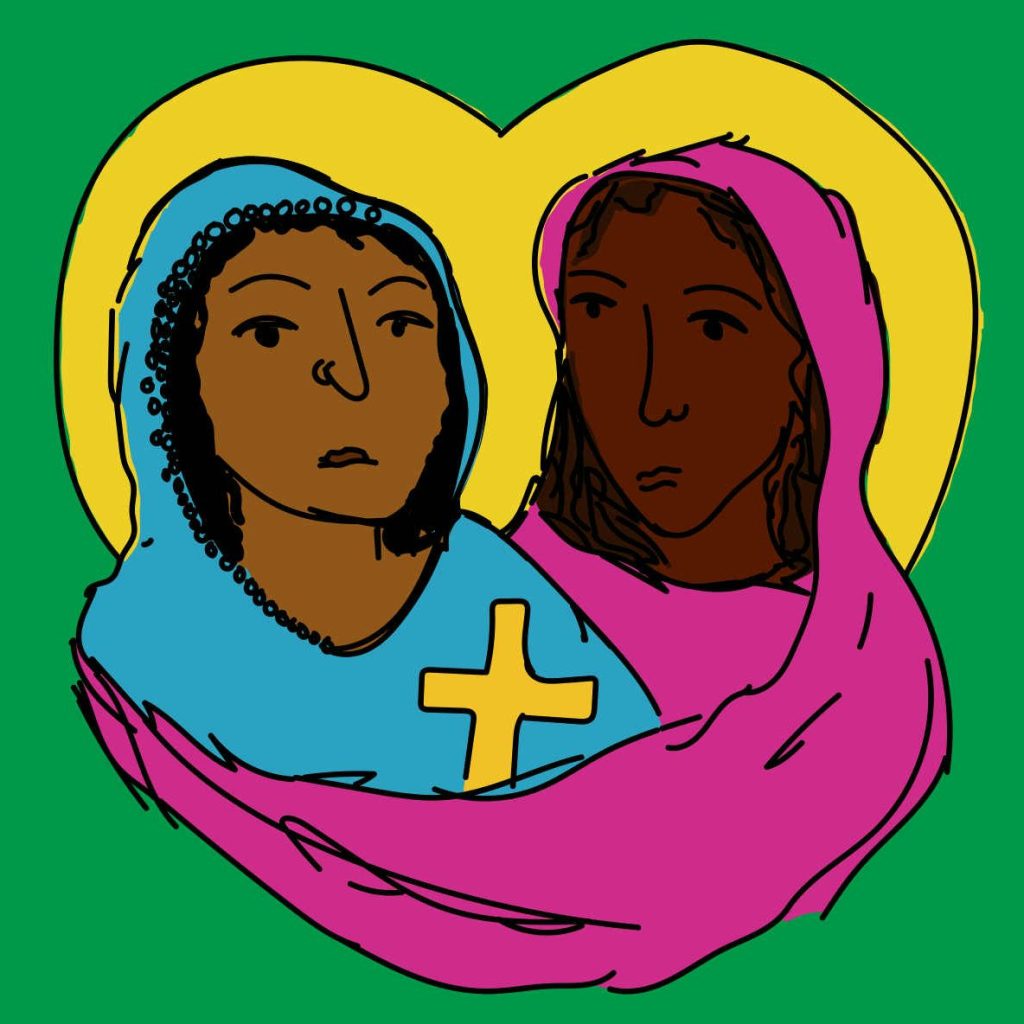
In 3rd century Carthage (modern day Tunisia), the noble Perpetua and the enslaved Felicity found kinship in a Roman prison. They had both been sentenced to death in the arena for their refusal to denounce Christ, and had found great comfort in each other despite their distinct class differences. Perpetua had recently given birth and Felicity was pregnant. From Perpetua’s first person account, we know she demanded to breast feed in prison, which because of her noble status, she was granted. Felicity gave birth to her child in prison. Her child was taken away but she was able to arrange a member of her community to take custody of the child. The enduring story behind Felicity and Perpetua was the love between them and their faith. The story goes they survived the trials of the arena, yet were still executed by the Romans.
Felicity and Perpetua can be read to have transcended the constraints of class, gender and sexuality. Staying steadfast to their faith, they resisted the patriarchal expectation to prioritise their motherhood by denouncing their faith. Like Wilgefortis and the other virgin saints, Felicity and Perpetua are powerful examples of fighting for bodily and spiritual autonomy, a sense of self; as reflected in Perpetua’s famous quote, ‘I cannot call myself by any other name than what I am’ – which resonates with queer and oppressed families today claiming their space in the world. They created a chosen family within the prison by making deep bonds with Christian martyrs. Today queer family structures often prioritise identity-based communities over blood relations; in this case it’s their spiritual identity that binds.
Part of their queer family structure was their children. Perpetua’s demands to breast feed is an example of strong advocacy and building resilience. In the preparations for executions, both mothers arranged for their children to be cared for after they were gone. They were both married, but these men are decentred from the story. Even as far as Perpetua’s prison diary being titled ‘The Passion of Saints Perpetua and Felicity,’ with no comment on either husband. This challenges their marital authority.
The ending of their story is often symbolised as the ‘Holy kiss’ the couple shared in the arena moments before execution. Showing their love, support and kinship for each other until the end.
Words and artwork by Vida O’Riordan
Research by Franky Green
Vida o’Riordan (they/them) is a Brighton based artist and crafter. You can find more of their work on Instagram @mossybits.
Franky Green (xe/xir) is a genderqueer artist, musician and academic. You can find xir on Etsy or Instagram (@rallying.reverie).

