
Ruth
In 1993, trans theorist and historian Susan Stryker gave a performance at a conference entitled ‘My Words to Victor Frankenstein above the Village of Chamounix: Performing Transgender Rage.’ Using Mary Shelley’s novel, Frankenstein, as her basis, she wrote a powerful piece in which she laid bare the vitriol that is directed towards transsexuals and boldly claims it as her own. She writes:
‘The transsexual body is an unnatural body. It is the product of medical science. It is a technological construction. It is flesh torn apart and sewn together again in a shape other than that in which it was born. In these circumstances, I find a deep affinity between myself as a transsexual woman and the monster in Mary Shelley’s Frankenstein.’
As I have come to claim my own unnatural, transsexual body, Stryker’s words have been invaluable to me. Here is a woman, responding powerfully to a growing movement of feminism that could only see the monstrous transsexual. Mary Daly, pioneering feminist theologian and hater of trans people wrote in 1978, ‘today the Frankenstein phenomenon is omnipresent not only in religious myth, but in its offspring, phallocratic technology…Transsexualism is an example of male surgical siring which invades the female world with substitutes.’ Despite this rhetoric, Stryker doesn’t decide to calmly lay out a counter-argument about why transsexuals are not monsters. Instead, she follows in the great tradition of queer activists and reclaim this slur as our own:
‘I want to lay claim to the dark power of my monstrous identity without using it as a weapon against others or being wounded by it myself. I will say this as bluntly as I know how: I am a transsexual, and therefore I am a monster.’
Over the past year, these words have become even more potent to me. I am currently exploring a call to religious life in the Church of England, an oddity even within the Anglican Communion. While I knew this process would not be a simple one, it turns out that my body has become the main barrier to me exploring this. While some communities have been open to the idea, there have been others who have expressed that I would not be welcome; this has included people I have not met saying that they would never accept being in community with a transsexual.
In some ways, this discernment process has pushed me to ask some essential questions. What kind of body do I want? How passable do I need to be to roam the institutional church? I am grateful to know that I am not alone in this. Transsexual friends of mine exploring calls to ordained ministry are bombarded with questions about their bodies, their sex lives, their plans to have children as a normal part of the discernment process. There’s solidarity in our shared experiences.
The more pernicious side of this process is a question that plagues me and my fellow transsexual religious: how well will you assimilate? Do you ‘pass’ well enough that you won’t be a problem? How much of a problem will you be?
“A transsexual body is a prayer to the Creator.”
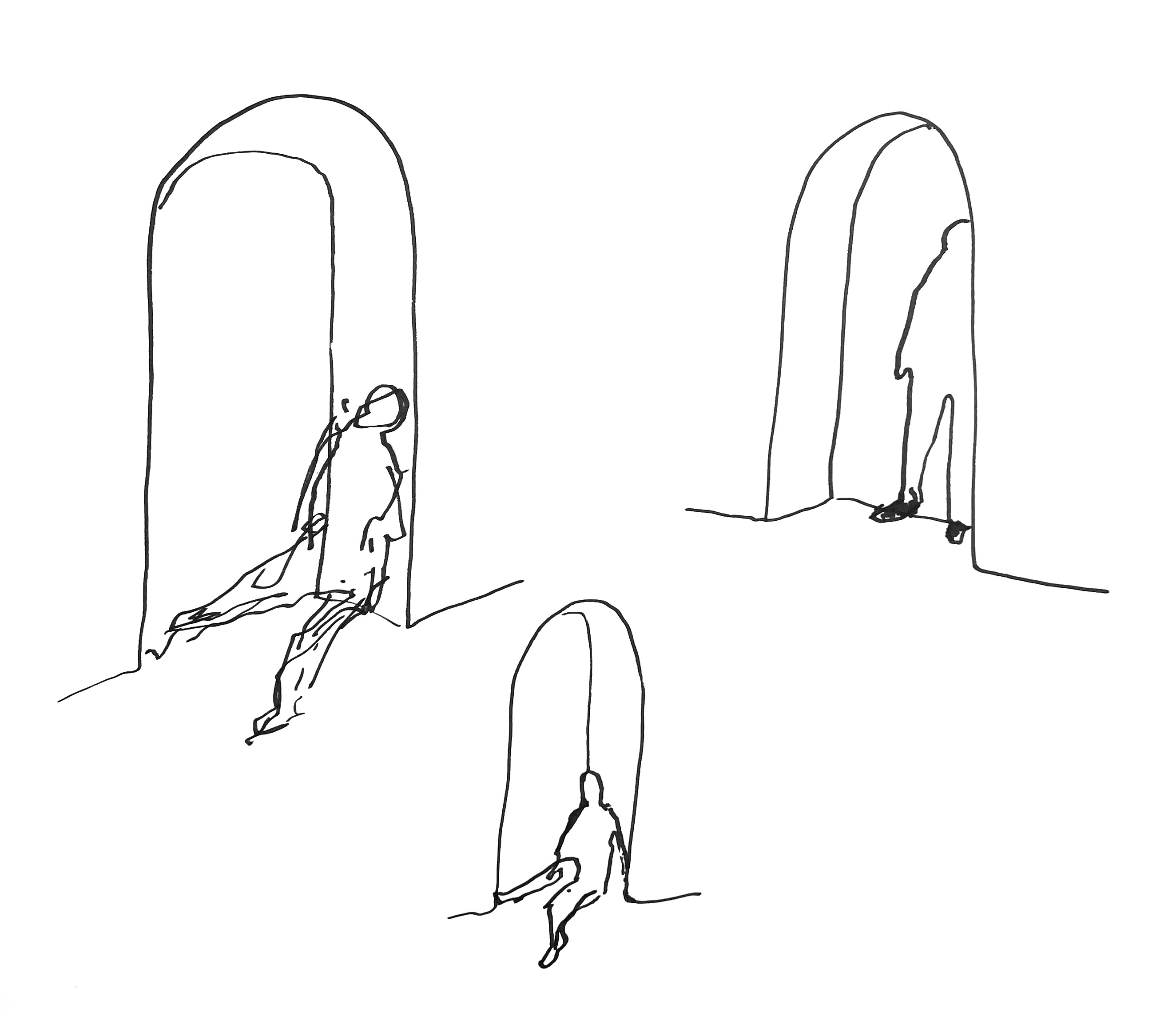
For anyone who diverts from the archetypal Christian because of their body, their race or their background, they will know this dilemma that I am facing all too well. We are offered an open door of welcome, only for it to be slammed in our face the minute we reveal our true selves. On one side of the slammed door is a religious community discussing what kind of genitals I can have before joining them. On the other side is me, hoping and praying that they’ll just stop debating my existence.
In Stryker’s piece, she speaks of rage in response to transsexual dehumanisation. ‘Like the monster’, she writes, ‘I am too often perceived as less than fully human due to the means of my embodiment; like the monster’s as well, my exclusion from human community fuels a deep and abiding rage in me that I, like the monster, direct against the conditions in which I must struggle to exist.’ Rage is a complicated topic for Christians; Jesus shows us in scripture that anger can be righteous when pointed towards the religious authorities of the day (Matthew 23), like grabbing a ‘whip of cords’ and driving the money changers out of the temple (John 2:13-22). But when he faced his arrest in the Garden of Gethsemane, Jesus also told Peter to, ‘put your sword back into its place; for all who take the sword will perish by the sword’ (Matthew 26:52). So often, the message we receive from Jesus is that the most Christian response is one of disruptive peace. Is there a place for transsexual rage in all of that?
I do not wish to be consumed by rage over this. I do not feel anger towards the Church or towards my body. If anything, this closed door has forced me not to cower away but to hold onto whatever monstrous power I possess. A transsexual body is a prayer to the Creator. It is a person taking agency of their body and their life, giving thanks for the body that they have been given and taking an active part in their creation. There might be closed doors to me, but for now I am content with being another monster roaming our churches; ‘beware, for I am fearless and therefore powerful.’* ▪️
*Mary Shelley, Frankenstein (Chapter 20)

